
HELLO!
I was out and about visiting persons from our congregation today, three to be exact. I enjoy these conversations. Obviously, I do not remember all the information that is shared. If I include those who have died, I have likely had 300+ such intentional pastoral visits since I arrived in July 2024. Long ago I decided not to record or write down information from these visits, I feel I owe it to the people I meet to protect their privacy. Writing down what is shared always runs the risk of these papers being found. No matter where I would store or keep this writing, the risk is there, and should I die suddenly, I would not want these “diaries” to be read by anyone other than me. As a result, I try to remember the highlights of our visits, so that if we visit again, we go back to where we left off. On a few occasions, when the person died, I could recall some of the stories they liked to repeat, it helped to bring that person to life in our midst. Finally, if someone I have visited is suddenly confronted with a challenge, they have had a prior experience of my presence and may be more likely to reach out for support. The visits also help me know the topics people are hoping to hear about, in sermons, studies, blogs, columns…
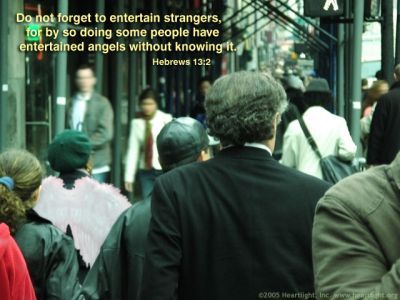
Visiting also gets me out of the office, into the community. Often, when I am “out and about” I will have occasion to talk with strangers, people riding the elevator with me, people I pass on the street (I was speaking to someone who was sitting on the bench in front of the Baptist Church last week), and others in the coffee shops where I sometimes meet people, who will come over to tell me they attended a funeral where I was the presider. Today, as I was going down the elevator a woman asked me if I was visiting my father. When I explained I was a minister, that opened-up a conversation. I spent 30 minutes in the parking lot listening to her. I was moved by her story and her experience. She is a very spiritual person.
And all of that sprang from an offer to carry a heavy item she had with her in the elevator. It is amazing to me how these conversations can begin with such simple gestures, “can I help you with that?” and “have a wonderful day”. I am not one who believes I have answers for others, I not looking to “fix” or “solve”, I am looking instead to connect. And from that place it never ceases to amaze me what God can do. Peace, Kevin
 We are a congregation of the United Church of Canada, a member of the Worldwide Council of Churches.